-
Title
-
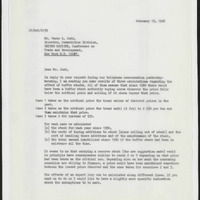
Letter to Perce R Judd
-
Description
-
From the folder 'Buffer stocks 135'
-
Date
-
1966
-
Date in document
-
yes
-
Formulas or calculations
-
no
-
Inventory number
-
NL-RtEUR_TBCOR_B.3.10-1
-
19
-
Storage location
-
Specifiek Magazijn
-
Filename
-
CDM19_NL-RtEUR_TBCOR_B.3.10-1.pdf
-
Provenance
-
Jan Tinbergen
-
Accrual Method
-
donation
-
Revised transcript
-
en
February 15, 1966
JT/SvW/G135
Mr. Perce R. Judd,
Director, Commodities Division,
UNITED NATIONS, Conference on Trade and Development,
New York N.Y. 10017.
Dear Mr. Judd,
In reply to your request during our telephone conversation yesterday morning, I am sending you some results of three calculations regarding the effect of buffer stocks. All of them assume that since 1950 there would have been a buffer stock authority buying cocoa whenever the price falls below the critical price and selling if it rises beyond that price.
Case 1 takes as the critical price the trend values of observed prices in the past.
Case 2 takes as the critical price the trend until it fell to $ 530 per ton and then maintains that price.
Case 3 takes $ 600 instead of 530.
For each case we calculated
(a) the stock for each year since 1950,
(b) the costs of buying additions to stock (minus selling out of stock) and the cost of handling these additions and of the maintenance of the stock,
(c) the total amount immobilized since 1950 if the buffer stock had been in existence all the time.
It seems to me that carrying a reserve stock (the new suggestion made) would in principle have consequences similar to cases 2 or 3 depending on what price had been taken as the critical one. Depending also on how much the consuming countries are willing to finance, a price could have been maintained somewhere between the lowest price observed and the ones taken for exercises 2 and 3.
The effects of an export levy can be calculated along different lines. If you want us to do so I would like to have a slightly more specific indication about the assumptions to be made.
1 15-2-1966
Mr. Perce R. Judd,
UNITED NATIONS,
New York.
I hope these provisional results give you some idea as to what we can do in the field of buffer stocks within the next few months, also for some more commodities.
Yours sincerely,
NETHERLANDS ECONOMIC INSTITUTE
Division of Balanced International Growth
[J. Tinbergen]
Prof. J. Tinbergen.
-
extracted text
-
fm^rmry 15, 1966
«/lMf/C135
Rr. f9ixc9 1* Judd,
Director» Coraioditiee UivisioQ,
mvmi> MnmSf ronfarence <m
Trade «xid SsTeXopment,
Mm York N.I. 10017.
Ssar Mr. J\;^d,
In reply to your r©qu©«t during OMT telaphoias convwreatioti y«eterday«oniinff, I Ml «sadiag you a(mB r^atdts of thr«e calciilations iregarding tb»
affect of buffer stock». All of Hharn tmvm» that sinc« 1950 there m u l d
have been a buffer stock authority buying cocoa vhimamx
tbe price falle
b«low the critical price and selling if it rise» beyond tbat price.
Case 1 takee as t}w critical price the trend values of obeerred prlees in the
paat.
Case 2 takee as the critical price the trend until it fell to $ 550 per tc«a and
than EaaintainB that price.
Case } takes $ 600 instead of 530.
For each case we calculated
(a) the stock for aaoh year since 1950,
(b) the costs of buying additions to stock (minuB selling out of stock) and the
cost of handling these additions and of the oainteoaaee of the etock,
(c) the total amount icaaobilized since 1950 if the btjffer stock had be«tt in
exlstance all the time.
It neem» to a* that carrying a reserre stock (the saw sitcgMtion laBtde) vould
in principle have consequences siallar to cases 2 or 3 d«f«nding on vhAt price
had been taken as the critical one. Depending also on hov m w h the consiaaing
countriee are willing to finance, a price could have bs«i aaintained somewhere
between the lowest price observed and tbs <m»8 taiosn for «cerolses 2 and 3.
Ths effects of an export levy can be calculated along different lines. If you
want us to do so I would like to have a slightly «ore specific indication
about the assunptions to be aade.
�.*"
lii
i^
flÖI»
r_ 1.
mm i^Jüa» M i l t « «MMMü «1 ÊÊÊUm i
�1
Ifw ïprk.
I hope th«e« provlsiotuil reetilts give 3rou scow id«A «e to what we
can do in the field of buffer stocks within the n«xt f«w mmthSt
also for amm BK}re commoditios*
Yoiirs eiucerely,
MTHBBLAiras BccircKic
imnwm
Division of Balanced International Growth
'7 7-
Prof. J. Tinb«rg«n.
15«2-1966
�wer-s-?r
r
-.o
,-^1
^
sntaoï
mJttaxn&iul b^ooMilüü Je.
�
-
fm^rmry 15, 1966
«/lMf/C135
Rr. f9ixc9 1* Judd,
Director» Coraioditiee UivisioQ,
mvmi> MnmSf ronfarence <m
Trade «xid SsTeXopment,
Mm York N.I. 10017.
Ssar Mr. J\;^d,
In reply to your r©qu©«t during OMT telaphoias convwreatioti y«eterday«oniinff, I Ml «sadiag you a(mB r^atdts of thr«e calciilations iregarding tb»
affect of buffer stock». All of Hharn tmvm» that sinc« 1950 there m u l d
have been a buffer stock authority buying cocoa vhimamx
tbe price falle
b«low the critical price and selling if it rise» beyond tbat price.
Case 1 takee as t}w critical price the trend values of obeerred prlees in the
paat.
Case 2 takee as the critical price the trend until it fell to $ 550 per tc«a and
than EaaintainB that price.
Case } takes $ 600 instead of 530.
For each case we calculated
(a) the stock for aaoh year since 1950,
(b) the costs of buying additions to stock (minuB selling out of stock) and the
cost of handling these additions and of the oainteoaaee of the etock,
(c) the total amount icaaobilized since 1950 if the btjffer stock had be«tt in
exlstance all the time.
It neem» to a* that carrying a reserre stock (the saw sitcgMtion laBtde) vould
in principle have consequences siallar to cases 2 or 3 d«f«nding on vhAt price
had been taken as the critical one. Depending also on hov m w h the consiaaing
countriee are willing to finance, a price could have bs«i aaintained somewhere
between the lowest price observed and tbs <m»8 taiosn for «cerolses 2 and 3.
Ths effects of an export levy can be calculated along different lines. If you
want us to do so I would like to have a slightly «ore specific indication
about the assunptions to be aade.
�.*"
lii
i^
flÖI»
r_ 1.
mm i^Jüa» M i l t « «MMMü «1 ÊÊÊUm i
�1
Ifw ïprk.
I hope th«e« provlsiotuil reetilts give 3rou scow id«A «e to what we
can do in the field of buffer stocks within the n«xt f«w mmthSt
also for amm BK}re commoditios*
Yoiirs eiucerely,
MTHBBLAiras BccircKic
imnwm
Division of Balanced International Growth
'7 7-
Prof. J. Tinb«rg«n.
15«2-1966
�wer-s-?r
r
-.o
,-^1
^
sntaoï
mJttaxn&iul b^ooMilüü Je.
�
-
fm^rmry 15, 1966
«/lMf/C135
Rr. f9ixc9 1* Judd,
Director» Coraioditiee UivisioQ,
mvmi> MnmSf ronfarence <m
Trade «xid SsTeXopment,
Mm York N.I. 10017.
Ssar Mr. J\;^d,
In reply to your r©qu©«t during OMT telaphoias convwreatioti y«eterday«oniinff, I Ml «sadiag you a(mB r^atdts of thr«e calciilations iregarding tb»
affect of buffer stock». All of Hharn tmvm» that sinc« 1950 there m u l d
have been a buffer stock authority buying cocoa vhimamx
tbe price falle
b«low the critical price and selling if it rise» beyond tbat price.
Case 1 takee as t}w critical price the trend values of obeerred prlees in the
paat.
Case 2 takee as the critical price the trend until it fell to $ 550 per tc«a and
than EaaintainB that price.
Case } takes $ 600 instead of 530.
For each case we calculated
(a) the stock for aaoh year since 1950,
(b) the costs of buying additions to stock (minuB selling out of stock) and the
cost of handling these additions and of the oainteoaaee of the etock,
(c) the total amount icaaobilized since 1950 if the btjffer stock had be«tt in
exlstance all the time.
It neem» to a* that carrying a reserre stock (the saw sitcgMtion laBtde) vould
in principle have consequences siallar to cases 2 or 3 d«f«nding on vhAt price
had been taken as the critical one. Depending also on hov m w h the consiaaing
countriee are willing to finance, a price could have bs«i aaintained somewhere
between the lowest price observed and tbs <m»8 taiosn for «cerolses 2 and 3.
Ths effects of an export levy can be calculated along different lines. If you
want us to do so I would like to have a slightly «ore specific indication
about the assunptions to be aade.
�.*"
lii
i^
flÖI»
r_ 1.
mm i^Jüa» M i l t « «MMMü «1 ÊÊÊUm i
�1
Ifw ïprk.
I hope th«e« provlsiotuil reetilts give 3rou scow id«A «e to what we
can do in the field of buffer stocks within the n«xt f«w mmthSt
also for amm BK}re commoditios*
Yoiirs eiucerely,
MTHBBLAiras BccircKic
imnwm
Division of Balanced International Growth
'7 7-
Prof. J. Tinb«rg«n.
15«2-1966
�wer-s-?r
r
-.o
,-^1
^
sntaoï
mJttaxn&iul b^ooMilüü Je.
�
-
fm^rmry 15, 1966
«/lMf/C135
Rr. f9ixc9 1* Judd,
Director» Coraioditiee UivisioQ,
mvmi> MnmSf ronfarence <m
Trade «xid SsTeXopment,
Mm York N.I. 10017.
Ssar Mr. J\;^d,
In reply to your r©qu©«t during OMT telaphoias convwreatioti y«eterday«oniinff, I Ml «sadiag you a(mB r^atdts of thr«e calciilations iregarding tb»
affect of buffer stock». All of Hharn tmvm» that sinc« 1950 there m u l d
have been a buffer stock authority buying cocoa vhimamx
tbe price falle
b«low the critical price and selling if it rise» beyond tbat price.
Case 1 takee as t}w critical price the trend values of obeerred prlees in the
paat.
Case 2 takee as the critical price the trend until it fell to $ 550 per tc«a and
than EaaintainB that price.
Case } takes $ 600 instead of 530.
For each case we calculated
(a) the stock for aaoh year since 1950,
(b) the costs of buying additions to stock (minuB selling out of stock) and the
cost of handling these additions and of the oainteoaaee of the etock,
(c) the total amount icaaobilized since 1950 if the btjffer stock had be«tt in
exlstance all the time.
It neem» to a* that carrying a reserre stock (the saw sitcgMtion laBtde) vould
in principle have consequences siallar to cases 2 or 3 d«f«nding on vhAt price
had been taken as the critical one. Depending also on hov m w h the consiaaing
countriee are willing to finance, a price could have bs«i aaintained somewhere
between the lowest price observed and tbs <m»8 taiosn for «cerolses 2 and 3.
Ths effects of an export levy can be calculated along different lines. If you
want us to do so I would like to have a slightly «ore specific indication
about the assunptions to be aade.
�.*"
lii
i^
flÖI»
r_ 1.
mm i^Jüa» M i l t « «MMMü «1 ÊÊÊUm i
�1
Ifw ïprk.
I hope th«e« provlsiotuil reetilts give 3rou scow id«A «e to what we
can do in the field of buffer stocks within the n«xt f«w mmthSt
also for amm BK}re commoditios*
Yoiirs eiucerely,
MTHBBLAiras BccircKic
imnwm
Division of Balanced International Growth
'7 7-
Prof. J. Tinb«rg«n.
15«2-1966
�wer-s-?r
r
-.o
,-^1
^
sntaoï
mJttaxn&iul b^ooMilüü Je.
�
-
fm^rmry 15, 1966
«/lMf/C135
Rr. f9ixc9 1* Judd,
Director» Coraioditiee UivisioQ,
mvmi> MnmSf ronfarence <m
Trade «xid SsTeXopment,
Mm York N.I. 10017.
Ssar Mr. J\;^d,
In reply to your r©qu©«t during OMT telaphoias convwreatioti y«eterday«oniinff, I Ml «sadiag you a(mB r^atdts of thr«e calciilations iregarding tb»
affect of buffer stock». All of Hharn tmvm» that sinc« 1950 there m u l d
have been a buffer stock authority buying cocoa vhimamx
tbe price falle
b«low the critical price and selling if it rise» beyond tbat price.
Case 1 takee as t}w critical price the trend values of obeerred prlees in the
paat.
Case 2 takee as the critical price the trend until it fell to $ 550 per tc«a and
than EaaintainB that price.
Case } takes $ 600 instead of 530.
For each case we calculated
(a) the stock for aaoh year since 1950,
(b) the costs of buying additions to stock (minuB selling out of stock) and the
cost of handling these additions and of the oainteoaaee of the etock,
(c) the total amount icaaobilized since 1950 if the btjffer stock had be«tt in
exlstance all the time.
It neem» to a* that carrying a reserre stock (the saw sitcgMtion laBtde) vould
in principle have consequences siallar to cases 2 or 3 d«f«nding on vhAt price
had been taken as the critical one. Depending also on hov m w h the consiaaing
countriee are willing to finance, a price could have bs«i aaintained somewhere
between the lowest price observed and tbs <m»8 taiosn for «cerolses 2 and 3.
Ths effects of an export levy can be calculated along different lines. If you
want us to do so I would like to have a slightly «ore specific indication
about the assunptions to be aade.
�.*"
lii
i^
flÖI»
r_ 1.
mm i^Jüa» M i l t « «MMMü «1 ÊÊÊUm i
�1
Ifw ïprk.
I hope th«e« provlsiotuil reetilts give 3rou scow id«A «e to what we
can do in the field of buffer stocks within the n«xt f«w mmthSt
also for amm BK}re commoditios*
Yoiirs eiucerely,
MTHBBLAiras BccircKic
imnwm
Division of Balanced International Growth
'7 7-
Prof. J. Tinb«rg«n.
15«2-1966
�wer-s-?r
r
-.o
,-^1
^
sntaoï
mJttaxn&iul b^ooMilüü Je.
�
-
fm^rmry 15, 1966
«/lMf/C135
Rr. f9ixc9 1* Judd,
Director» Coraioditiee UivisioQ,
mvmi> MnmSf ronfarence <m
Trade «xid SsTeXopment,
Mm York N.I. 10017.
Ssar Mr. J\;^d,
In reply to your r©qu©«t during OMT telaphoias convwreatioti y«eterday«oniinff, I Ml «sadiag you a(mB r^atdts of thr«e calciilations iregarding tb»
affect of buffer stock». All of Hharn tmvm» that sinc« 1950 there m u l d
have been a buffer stock authority buying cocoa vhimamx
tbe price falle
b«low the critical price and selling if it rise» beyond tbat price.
Case 1 takee as t}w critical price the trend values of obeerred prlees in the
paat.
Case 2 takee as the critical price the trend until it fell to $ 550 per tc«a and
than EaaintainB that price.
Case } takes $ 600 instead of 530.
For each case we calculated
(a) the stock for aaoh year since 1950,
(b) the costs of buying additions to stock (minuB selling out of stock) and the
cost of handling these additions and of the oainteoaaee of the etock,
(c) the total amount icaaobilized since 1950 if the btjffer stock had be«tt in
exlstance all the time.
It neem» to a* that carrying a reserre stock (the saw sitcgMtion laBtde) vould
in principle have consequences siallar to cases 2 or 3 d«f«nding on vhAt price
had been taken as the critical one. Depending also on hov m w h the consiaaing
countriee are willing to finance, a price could have bs«i aaintained somewhere
between the lowest price observed and tbs <m»8 taiosn for «cerolses 2 and 3.
Ths effects of an export levy can be calculated along different lines. If you
want us to do so I would like to have a slightly «ore specific indication
about the assunptions to be aade.
�.*"
lii
i^
flÖI»
r_ 1.
mm i^Jüa» M i l t « «MMMü «1 ÊÊÊUm i
�1
Ifw ïprk.
I hope th«e« provlsiotuil reetilts give 3rou scow id«A «e to what we
can do in the field of buffer stocks within the n«xt f«w mmthSt
also for amm BK}re commoditios*
Yoiirs eiucerely,
MTHBBLAiras BccircKic
imnwm
Division of Balanced International Growth
'7 7-
Prof. J. Tinb«rg«n.
15«2-1966
�wer-s-?r
r
-.o
,-^1
^
sntaoï
mJttaxn&iul b^ooMilüü Je.
�