
Jan Tinbergen
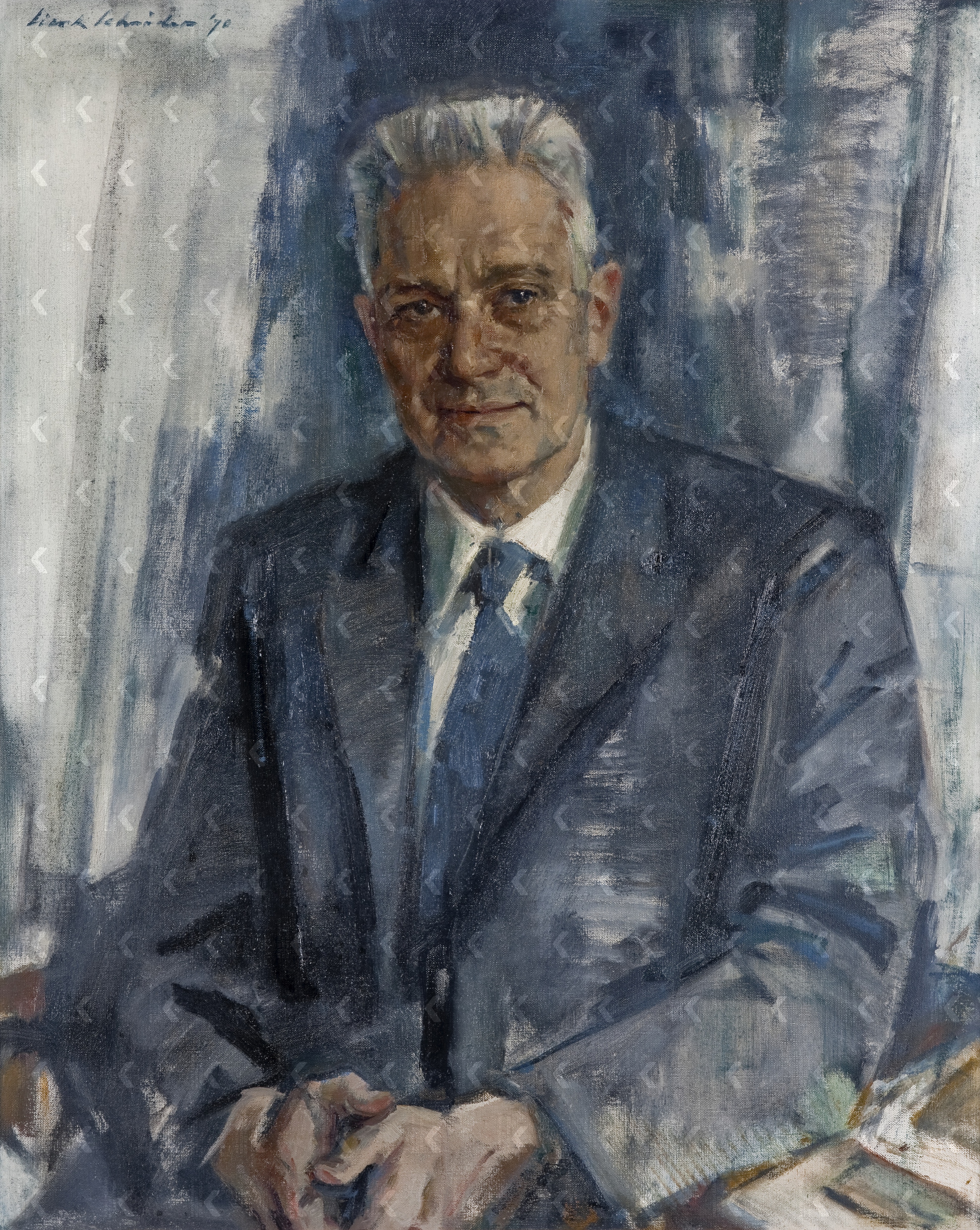
The founder of econometrics
Jan Tinbergen was a pioneer from The Hague who transformed the field of economics by combining mathematics and statistics — thereby laying the foundations for all modern economic models.
"The aim of economics is to serve the welfare of ordinary people, not abstract theory."
— Jan Tinbergen (1903–1994)
Biography
12 April 1903 – Born in The Hague
Jan Tinbergen was born the eldest of five children. His brother Nikolaas would later also win the Nobel Prize in biology, in 1973. A collection of his brother Nikolaas’s correspondence has also been preserved at the Bodleian Library in England. A unique family in the history of science and beyond. His sister Mien Tinbergen had played an important role in the resistance.
However, the Tinbergen family included more than just these five children, as they also took in children whose parents had spent a long time in the Dutch East Indies. During the First World War, they provided shelter to a number of Belgian and Austrian refugees. Dirk Tinbergen, the father, had a love of languages and the arts and passed this on to his children; his occasional outdoor drawing lessons and the walks and cycle rides with his children during the summer holidays contributed to the pleasant and intellectual atmosphere that characterised their education. The mother, Jeanette van Eek, embodied the family’s sense of order and routine, both through her unassuming approach to running the household and through her interest in mathematics.
1921–1926 – Education at Leiden University
Tinbergen studied mathematics and physics in Leiden and was awarded his doctorate in 1926 under the supervision of the renowned Nobel laureate Paul Ehrenfest. His background in mathematics would later have a significant influence on his economic work.
Jan attended primary school and was awarded a certificate stating that he was ‘an outstanding pupil’. He then went on to the Hogere Burgerschool in The Hague, where his favourite subjects were natural sciences and mathematics. This was a special type of school, intended for middle-class children who wished to improve their social standing. These schools provided access to the university system following the passing of supplementary examinations in Latin and Greek, which Tinbergen also took. During his school years, Tinbergen’s social and political views were shaped, partly as a result of the horrors of the First World War, which he witnessed through the eyes of refugees, and partly through his friendship with Tine Johanna de Wit (1902–1991), who later became his wife. He went to Leiden University in 1921. He explained his choice of degree at university: “I wanted to finish quickly and then switch to economics. Now you might wonder why I chose physics in the first place, but it was clearly my true interest. I loved physics and mathematics, and I also felt that those might well be the subjects I was strongest at, but at the same time I had already become convinced that I could probably be of greater use to society as an economist. I think most of the major political debates were economic rather than physical in nature, and that is why I hoped to develop sufficient mathematical skills to tackle these issues and perhaps regard physics as a more advanced science than economics.”
He studied mathematics and theoretical physics at Leiden University, where he was most influenced by Paul Ehrenfest. In 1987, he wrote in the NRC Handelsblad about his lecturers in Leiden: “I owe a great deal to Ehrenfest. I studied physics at a time when a number of fascinating people were gathered there. Ehrenfest did not so much teach as prefer dialogue. Thanks to him, I was able to take part in discussions with Albert Einstein. Kamerling Onnes, Lorentz and Zeeman were there too.” As a student under the tutelage of such lecturers, one can indeed count oneself very fortunate.
However, Tinbergen also had political interests linked to his left-wing views. At university, he founded a student association for social democratic students and also a student newspaper. Indeed, some of Tinbergen’s earliest publications were articles he wrote for the socialist newspaper Het Volk, in which he examined the effects of the economic crisis of 1920–1922 on unemployment and its consequences for the lives of the poor. During his undergraduate studies, he joined the PvdA: “In 1923, I joined the PvdA and its youth organisation; I came into contact with the poorer parts of Leiden, which students don’t usually know very well. Looking back, I wonder whether I would have been clever enough to make a contribution to modern physics; in any case, my interest lay in helping to change society.”
After completing his bachelor’s degree in Leiden, Tinbergen went on to study for his PhD at Leiden University.
1929 – Central Bureau of Statistics
He joined the CBS, where he began applying statistical methods to economic issues. This marked the start of his pioneering work in econometrics.
After completing his bachelor’s degree in Leiden, Tinbergen continued his studies at the same university to pursue his doctorate under the supervision of Ehrenfest. He was, however, required to perform military service, but refused to do so on the grounds of his political convictions. He was fortunate that, a few years earlier, in 1923, legislation had been passed in the Netherlands allowing conscientious objectors to be exempted from compulsory military service. This legislation stipulated that conscientious objectors had to perform public service instead. Tinbergen was assigned to an administrative post at the state prison in Rotterdam, where he was to serve for fifteen months. His father, however, tried to arrange a better and more satisfying post for his son, and thanks to his intervention, it was decided that Tinbergen could transfer to the Central Bureau of Statistics in The Hague. He had already served five of his fifteen months and therefore only had to work at the Central Bureau of Statistics for a further ten months. When he had completed these ten months in 1928, the head of the bureau persuaded him to take up a permanent post there. He agreed, on condition that he be granted a break to complete his doctoral thesis. In 1929, Tinbergen submitted his thesis Minimum Problems in Physics and Economics. It combined mathematics, physics and economics. In the introduction, Tinbergen thanked Ehrenfest for drawing his attention to a subject that enabled him to combine mathematical theories with his political interests. The bulk of the thesis is mathematical in nature and deals with minimisation problems. He then added two appendices: one described applications of mathematics in physics, the other described applications in economics. The significance of Tinbergen’s work lay in the fact that it was one of the first examples of a new concept in mathematics, namely mathematical modelling. Of course, mathematical physics had already been studied throughout history, but Tinbergen’s work opened up a new avenue for the applications of mathematics, which spanned a wide range of fields.
From 1929 to 1945, he worked as a statistician at the Central Bureau of Statistics, but he also lectured at the University of Amsterdam in the early 1930s.
1933–1955 – First Director of the CPB
Tinbergen became the first director of the Netherlands Bureau for Economic Policy Analysis (CPB), a post he held for more than twenty years. Whilst at the CPB, he developed the first macro-econometric model of the Dutch economy.
Life at the Central Bureau of Statistics in The Hague in the 1930s was anything but dull. The unemployment problems resulting from the Great Depression had fuelled demand for statistics for policy-making purposes. Although the Central Bureau of Statistics had been compiling business cycle statistics for some time, it was not until the establishment of a department for business cycle research that it really gained momentum. Tinbergen, who had just completed his doctoral thesis and joined the statistics department, was put in charge of this new department. Clearly influenced by the German business cycle research institutes in Berlin and Frankfurt, Tinbergen sought to gradually develop an empirical approach to dynamic problems in the economy. At the same time, he surrounded himself with young engineers, mathematicians and physicists, such as Johannes Bernardus Dirk Derksen, Pieter De Wolff and A. Bijl. Together they formed the so-called ‘Q.C.’ or ‘Quantitative Club’, an informal group of young men who were both socially engaged and quantitatively or mathematically oriented. Together with others, such as Tjalling Koopmans, they took part in small discussion groups in which the shortcomings of contemporary economics and the need for a more rigorous approach were evaluated.
1955–1973 – Professor in Rotterdam
As a professor at the Netherlands School of Economics (later Erasmus University), he trained generations of economists and continued his international advisory work for the UN.
From 1933 to 1973, he was professor of economics at the Netherlands School of Economics in Rotterdam. He was appointed to the board of the scientific bureaux of the Dutch Labour Party and co-authored the Labour Plan in 1935. This plan was based on Tinbergen’s mathematically grounded principles of economics.
In the late 1930s, Tinbergen worked as a scientific adviser to the League of Nations. They had asked him to conduct a statistical investigation into which of the business cycles proposed by Gottfried Haberler in his book Prosperity and Depression (1937) performed best in practice. Haberler’s book had been written at the request of the League of Nations. Tinbergen was granted a two-year leave of absence from the Central Bureau of Statistics to carry out this work. Another book that inspired him was John Maynard Keynes’s General Theory (1936).
Tinbergen’s response to Keynes could be found in his article On a Method of Statistical Research. A Reply (1940); see Kurt Dopfer’s article for details of this controversy.
In 1945, he was appointed director of the Netherlands Bureau for Economic Policy Analysis. Tinbergen later developed other econometric models; in particular, he constructed an econometric model of the US. In 1969, he and a colleague were awarded the first Nobel Prize in Economics for this very first macroeconomic model.
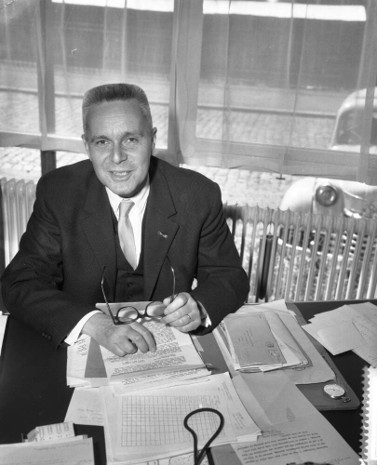
His most important publications include Fundamental Problems of Theoretical Statistics (1936), Statistical Testing of Business Cycles (1939), Econometrics (1941), On the Theory of Economic Policy (1952), Economic Policy: Principles and Design (1956) and Income Distribution: Analysis and Policies (1975).
9 June 1994 – Death in The Hague
Jan Tinbergen died at the age of 91 in his hometown. His legacy lives on in econometrics, international economic policy and the Erasmus School of Economics, named after him.
The Nobel Prize in Economic Sciences was awarded for the first time in 1969, and Jan Tinbergen was one of the first two laureates. This confirmed his status as the founder of an entirely new economic discipline.
The Nobel Prize
The Tinbergen brothers
"For the development and application of dynamic models for the analysis of economic processes."
Shared with Ragnar Frisch
The prize was shared with the Norwegian economist Ragnar Frisch, co-founder of the Econometric Society and a pioneer of quantitative economics. Together, they laid the foundations of modern econometrics.
Historical significance
It was the very first award of the Nobel Prize in Economic Sciences — established by the Swedish Riksbank to mark its 300th anniversary. Tinbergen was therefore not only the first Dutch economist to win the prize, but also one of the very first in history.
Major Scientific Contributions
Econometrics
Tinbergen was one of the first to systematically apply statistical methods to economic theories. He transformed economics from a descriptive science into a testable, quantitative discipline.
Business Cycle Theory
He developed the first macro-econometric model of the Dutch economy and, later, of the US economy. This enabled him, for the first time, to mathematically predict economic business cycles.
The Tinbergen Rule
In his work on economic policy, Tinbergen introduced the famous ‘Tinbergen Rule’: the number of policy objectives must be equal to the number of available policy instruments. This principle remains a cornerstone of modern economic policymaking.
Development Economics
Tinbergen applied his econometric models to the challenges facing developing countries. As an adviser to the UN, he helped to design policies for equitable economic growth and fair income distribution.
Optimal Income Distribution
In his later work, he studied income and wealth inequality in depth. He advocated international cooperation and redistribution as means of combating poverty at a structural level.
Selected Publications
Business Cycles in the United States (1939)
The first macro-econometric model ever constructed, a milestone that set the template for all future economic forecasting models worldwide.
On the Theory of Economic Policy (1952)
Introduction of the famous Tinbergen rule: the number of policy objectives must be equal to the number of available policy instruments. A standard work in economic theory.
Economic Policy: Principles and Design (1956)
A systematic framework for welfare-maximising economic policy-making, which has been applied by governments and international organisations around the world.
Income Distribution: Analysis and Policies (1975)
An in-depth study of income inequality, in which Tinbergen was one of the first to formalise and quantify the concept of an optimal income distribution.
Global Impact & Legacy
Institutional legacy
The Erasmus School of Economics in Rotterdam bears his name as a lasting tribute. The Tinbergen Institute, a joint research institute of Erasmus University, the University of Amsterdam (UvA) and VU Amsterdam, continues his academic legacy.
International Adviser
Tinbergen advised several UN organisations and the governments of developing countries. For decades, he exerted a direct influence on international economic policy, far beyond the confines of the academic world. He was a source of inspiration for *The Limits to Growth*, a highly significant publication by the Club of Rome in the 1970s.
Key figures
- An active academic career spanning more than 50 years
- Recipient of the first-ever Nobel Prize in Economic Sciences (1969)
- Founder of modern econometrics
- Author of dozens of influential books and hundreds of articles
- An inspiration to generations of economists worldwide
Sources
- CBS. "Economische berichtgeving: conjunctuuronderzoek." CBS.nl, 5 maart 2025. https://www.cbs.nl/nl-nl/onze-diensten/overzicht-publicaties/het-licht-van-de-statistiek/1892-1940/economische-berichtgeving-conjunctuuronderzoek
- Bouwman, Willen. "Het verdriet van Jan Tinbergen." Nederlands Dagblad, 13 mei 2021. https://www.nd.nl/cultuur/boeken/1034628/het-verdriet-van-jan-tinbergen
- Ficheroux, Tim. "These are the tangible memories of Jan Tinbergen, fifty years after his Nobel Prize." Erasmus Magazine, 10 december 2019. https://www.erasmusmagazine.nl/en/2019/12/10/these-are-the-tangible-memories-of-jan-tinbergen-fifty-years-after-his-nobel-prize/
- Dekker, Erwin. Jan Tinbergen (1903-1994) and the Rise of Economic Expertise. Cambridge, United Kingdom: Cambridge University Press, 2021.